Residential septic tank pumping
Routine pumping for Cheyenne homes, including established neighborhoods and newer suburban properties with different tank locations and access conditions.

Septic tank pumping service · Cheyenne, WY
In South Cheyenne, a tank job may sit behind a broad suburban driveway, across alkaline soil and exposed to Wyoming wind. One phone call gets the tank size, access and service visit sorted.
A real person answers · No forms · No waiting on a quote email

Size
The operator matches the tank to the property, from a Small Septic Tank for compact homes to a Standard Septic Tank for common Cheyenne residences.
Quote
The quote is given on the call and changes with tank size, access, distance, material and pumping conditions.
Date
The service date is set on the call after the property and tank access are reviewed.
From Capitol North and South Cheyenne to Fox Farm College and the edges of Ranchettes, septic work varies by home age, driveway width and tank access. Properties near open ground face wind and snow, while Laramie County acreage and suburban homes can require different pumping approaches.
Services
Cheyenne
Cheyenne has established capital-city neighborhoods, broad suburban driveways and properties reaching toward open Laramie County ground. That mix affects how the tank is found, how equipment approaches, and whether snow, wind or alkaline soil limits access. The service is booked as septic tank pumping, with cleaning and inspection work matched to the property and its immediate problem.
Routine pumping for Cheyenne homes, including established neighborhoods and newer suburban properties with different tank locations and access conditions.
Cleaning removes settled material from residential systems around South Cheyenne, Capitol North and Laramie County properties.
Backup pumping addresses an active wastewater problem while access, tank level and safe equipment placement are checked at Cheyenne homes.
Inspection pumping helps reveal tank condition for buyers, sellers and property owners around Cheyenne and Fox Farm College.
Commercial service fits businesses, facilities and multi-unit properties in Cheyenne where holding capacity and access require closer planning.
RV and holding tank pumping suits Cheyenne properties, travel setups and rural Laramie County locations without ordinary residential tank layouts.
Emergency pumping addresses urgent wastewater conditions in Cheyenne, with weather, driveway approach and the tank location considered together.
The Standard Septic Tank, 1000-1500 gallons, commonly fits scheduled pumping at Cheyenne residences. Smaller homes may use less capacity, while acreage properties, facilities and multi-unit buildings can need larger tank categories after the system is described on the call.
Typically suited to smaller residential tanks and routine household pumping.
Up to 1000 gallons, this can suit a smaller Cheyenne residence or compact household system, especially where the tank and driveway access are straightforward.
A common residential tank range for scheduled pumping and cleaning.
1000-1500 gallons, this is a common fit for scheduled pumping at Cheyenne homes in established neighborhoods and broad suburban lots.
A larger residential or light commercial tank range requiring extended pumping capacity.
1500-2000 gallons, this may fit a larger residence, acreage property or light commercial system near Ranchettes and the Laramie County edge.
A high-capacity tank or holding system commonly used by businesses, facilities and multi-unit properties.
Over 2000 gallons, this serves higher-capacity tanks and holding systems at Cheyenne businesses, facilities and multi-unit properties.
Cost
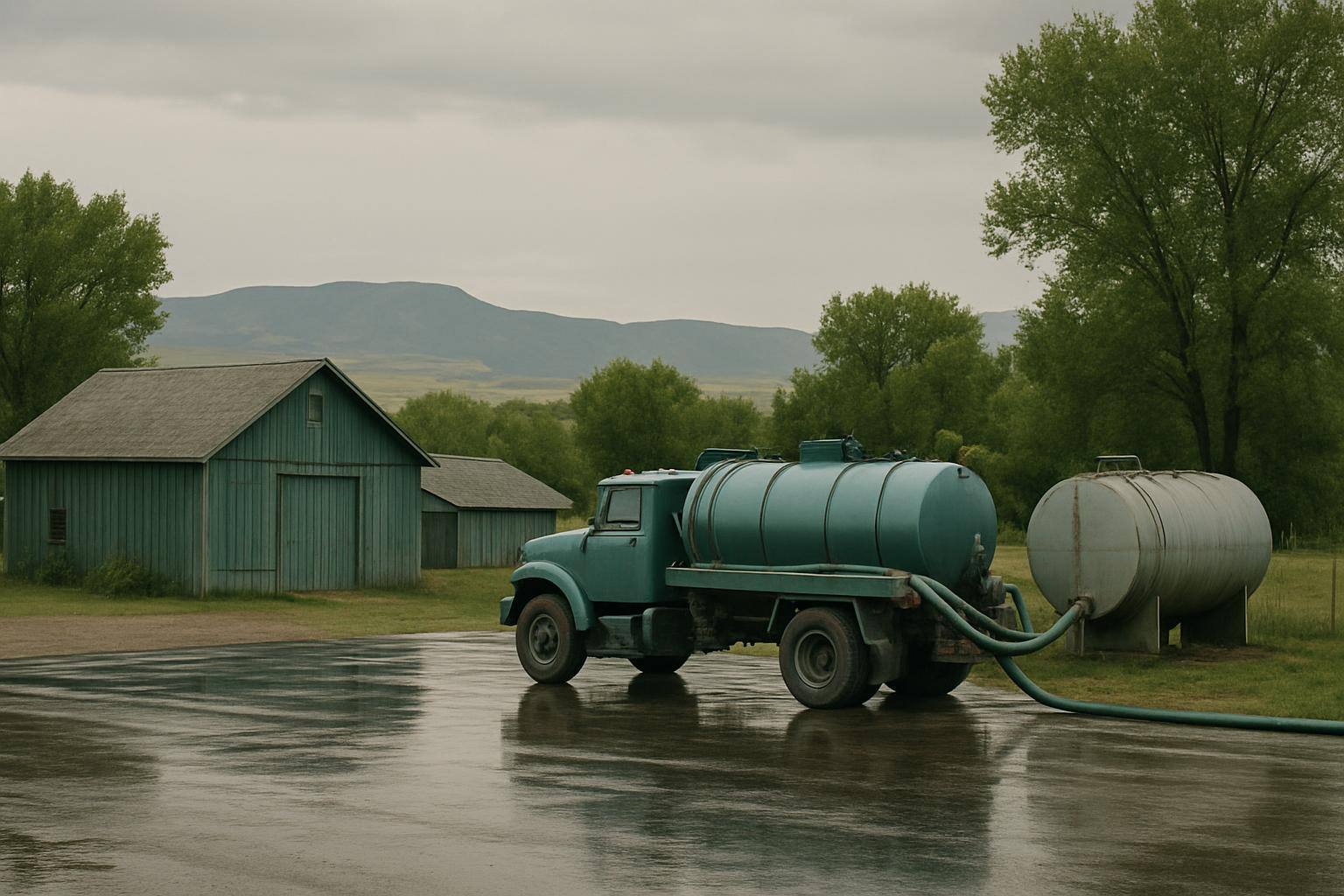
The exact quote is given on the call after the tank and property are described. Cost depends on tank size, pumping conditions, distance from Cheyenne, driveway access, service date, material and the work required.
Tank capacity changes the pumping work and equipment needs, from a smaller residential system to a commercial holding tank in Cheyenne.
Distance from the truck to the tank matters on broad Cheyenne lots, long driveways and properties where alkaline soil or snow limits the approach.
The material in the tank affects handling requirements, especially with backups, heavy settled solids or commercial wastewater conditions.
An inspection, backup or emergency can require different work from routine pumping, with placement and site condition affecting the quote.
To avoid surprise charges, describe the tank size, access route, known backup conditions and property location on the call. Ask how distance, difficult ground, extra pumping work or additional material could affect the exact quote.
What goes in
This covers household septic systems at Cheyenne homes, including routine pumping, cleaning and inspection work where the tank can be reached safely.
This category fits business, facility and multi-unit systems, including a typical higher-capacity Cheyenne commercial holding tank that needs planned pumping.
Backups and urgent wastewater conditions can be reviewed for Cheyenne properties, with access, tank level and safe placement addressed before pumping.
Not accepted. Do not put chemicals, fuel, paint, hazardous waste, construction debris or unrelated trash into the system, and service does not cover unapproved materials.
Projects
Routine home service for Cheyenne residences, from Capitol North houses to South Cheyenne properties with broad suburban driveways.
Backup service addresses wastewater rising or slow drainage at Cheyenne homes, with tank level and safe access checked before pumping.
Inspection pumping can support a property review in Cheyenne, Fox Farm College or surrounding Laramie County when tank condition must be seen.
A sale-related pumping visit helps document current system conditions for properties in Cheyenne neighborhoods and on the county edge.
Commercial service fits Cheyenne businesses, facilities and multi-unit properties where higher capacity and truck placement need advance review.
RV holding tank service suits travel setups and rural Laramie County properties where the tank is separate from a household septic system.
Urgent pumping for Cheyenne properties considers wind, snow, driveway access and the safest route to a backed-up tank.
Share the tank size, property type, location, last pumping and symptoms so the operator can match the service.
Set the service date by phone, including driveway conditions, seasonal obstacles and any access restrictions at the property.
The crew reaches the tank, checks the work area and pumps the system according to its capacity and condition.
After pumping, review observations about access, tank condition and any further cleaning or inspection work that may be needed.
Weather
Cheyenne wind can move loose covers and debris, while winter snow and rapid temperature changes can hide or harden the access route. Alkaline soils may become difficult under changing moisture and freezing conditions, so describe current ground and driveway conditions when scheduling.
Placement
At Cheyenne homes, the tank is commonly reached from a private driveway or side access rather than a public road. Broad suburban drives can help, but fences, parked vehicles, overhead branches, soft alkaline soil, snowbanks and distance from the truck can limit where equipment is placed.
Permits
Private property usually needs no permit for septic tank pumping. If equipment or hoses must occupy a street, alley, boulevard or sidewalk, ask the City of Cheyenne or the relevant Laramie County authority about approval, fees and how long the approval may last.
An HOA, covenant or landlord may control driveway use, parking, ground disturbance or service access in Laramie County. Check those rules before scheduling if the property has shared access or managed common areas.
The spot needs a usable approach, enough width for the service equipment, overhead clearance and firm ground near the tank. Clear snow, vehicles and loose material where possible, and mention narrow drives, soft alkaline soil, fences or seasonal drifted snow.
Service covers Cheyenne neighborhoods and settings including Capitol North, South Cheyenne, Fox Farm College, central neighborhoods, suburban east and west sides, and properties near the city's broad outer drives. Nearby service areas can include South Greeley, Ranchettes, Pine Bluffs, Laramie and the surrounding Laramie County region.
Not sure about your street? Ask on the call and we will tell you which office handles it.
Timing
Cheyenne septic pumping can become more complicated during winter snow, freeze and rapid temperature changes, especially where the tank is off the main driveway. Spring thaw can soften ground, while summer property work and fall preparation may increase requests for routine, sale or inspection pumping.
Snowbanks, frozen ground and windblown cover can hide lids or narrow the truck route around Cheyenne homes. Describe clearing, ice and exposure so placement can be reviewed before the service visit.
Rapid changes from frozen to wet ground can make driveways soft, particularly on larger Laramie County properties. A firm approach and clear tank location help determine a workable setup.
Service area
Cheyenne is part of our Laramie County coverage, and we also serve the neighboring communities below.
Why us
Cheyenne combines capital-city neighborhoods with broad suburban driveways and open county properties. That changes how the tank is located, how far equipment must reach and whether wind, snow or alkaline soil affects the setup.
Haste Dumpster Service · Cheyenne
A tank near Capitol North may have different access from one near South Cheyenne or Ranchettes. Describing the property, driveway and tank location on the call helps match the pumping work to the actual site.
Click Here to Call (254) 249-9925FAQs
Still have a question about Cheyenne? Call (254) 249-9925 and ask a real person.
The exact quote is given on the call and depends on tank size, access distance, material, pumping conditions and the work requested. Cheyenne properties with long drives, snow, soft alkaline soil or a backup may need different handling from a routine accessible tank.
The right size depends on the tank at the property, not just the house name or neighborhood. A Standard Septic Tank, 1000-1500 gallons, is common for residential work, while smaller homes, acreage systems and commercial properties may fit other categories.
Septic tank pumping is a service visit rather than a dumpster rental period. If you also need a dumpster for a Cheyenne project, the standard rental is seven days, with extensions available by the day.
Ordinary household wastewater and suitable toilet tissue belong in a residential septic system, while commercial systems require their own material review. Tell the operator about grease, heavy solids, unusual wastewater or a holding tank before service in Cheyenne.
Chemicals, fuel, paint, hazardous waste, construction debris and unrelated trash cannot go into the system. These materials can change handling requirements and may not be covered, so disclose anything unusual from a Cheyenne home, business or RV.
Private property usually needs no permit for septic tank pumping. Street, alley, boulevard or sidewalk placement may need approval from the City of Cheyenne or Laramie County, so ask about local requirements, fees and approval duration.
The equipment needs a clear approach, adequate width, overhead clearance and firm ground near the tank. Remove vehicles and snow where possible, and mention fences, soft alkaline soil, narrow access or a long hose route during scheduling.
The service date is set on the call after the tank, property and access are reviewed. Ask about same-day or next-day delivery if the situation is urgent, but timing depends on the service plan and site conditions.
Cheyenne winter weather can affect pumping when snow, ice, wind or frozen ground hides the lid or restricts the truck route. Rapid temperature changes and spring thaw can also soften alkaline soil, so describe current access before the visit.
Service can be reviewed for Ranchettes, Fox Farm College and nearby Laramie County properties. The operator will need the exact location, tank type, driveway approach and any snow, fence or ground conditions that affect equipment placement.
A real person answers · No forms · Every quote given on the phone