Residential septic tank pumping
Routine pumping for homes in North Lovell, South Lovell, and valley acreage, with access checked before the service date is set.

Septic tank pumping service · Lovell, WY
North Lovell homes near the irrigated valley can need tank access planned around wet ground and narrow drives, and one phone call sorts the pumping details.
A real person answers · No forms · No waiting on a quote email

Size
The operator matches your tank to the right capacity, often the 1000-1500 gallons range for routine residential pumping in Lovell homes.
Quote
Your exact quote is given on the call, based on tank size, access, distance, material, and pumping conditions.
Date
The service date is set on the call around access, weather, and your Lovell property schedule.
From downtown Lovell and North Lovell to South Lovell acreage, tank work follows irrigation lines, older homes, outbuildings, and rural drives beneath the Bighorn Canyon country. We plan the pumping approach around wet ground, winter snow, wind, and the route from the road to the tank.
Services
Lovell
Lovell properties range from town homes and older residential lots to irrigated valley acreage, farm settings, and commercial sites along the local corridors. That mix changes where a truck can stand and how the hose reaches the tank. We ask about the tank, access, recent irrigation runoff, and the work needed before setting a service visit.
Routine pumping for homes in North Lovell, South Lovell, and valley acreage, with access checked before the service date is set.
Cleaning removes settled material after pumping, useful for Lovell systems showing slow drainage or needing a closer look.
Backup pumping addresses a full or overflowing system in Lovell homes, while access and safe hose routing are reviewed first.
Inspection pumping helps reveal tank condition for Lovell property work, especially when the lid location or system history is uncertain.
Commercial pumping serves Lovell businesses, facilities, and larger holding systems where tank capacity and service access require careful planning.
RV and holding tank pumping suits travel units, rural properties, and temporary setups around Lovell and the Big Horn County valley.
Emergency pumping handles urgent Lovell wastewater problems, with weather, ground firmness, and the safest route considered before arrival.
The 1000-1500 gallons range fits many routine residential jobs in Lovell, but tank size is not guessed from the house alone. Older homes, additions, acreage systems, and commercial use can change the recommendation.
Typically suited to smaller residential tanks and routine household pumping.
Up to 1000 gallons, this tier commonly suits a smaller Lovell residence with a compact residential system and routine household pumping needs.
A common residential tank range for scheduled pumping and cleaning.
1000-1500 gallons is a common fit for residential systems in North Lovell, South Lovell, and irrigated valley homes scheduled for regular pumping.
A larger residential or light commercial tank range requiring extended pumping capacity.
1500-2000 gallons suits larger Lovell homes, acreage properties, or light commercial systems that need extended pumping capacity.
A high-capacity tank or holding system commonly used by businesses, facilities and multi-unit properties.
Over 2000 gallons fits high-capacity systems serving Lovell businesses, facilities, multi-unit properties, or holding systems with heavier use.
Cost
The exact quote is given on the call after we discuss tank size, distance from Lovell, access, rental or service timing, and the material being pumped. Ground conditions and the work required can also affect the final cost.
Capacity changes pumping time and equipment needs, so the actual tank size matters more than guessing from the number of bedrooms in a Lovell home.
A long hose route, narrow drive, soft irrigation ground, or limited turning space outside Lovell can add work compared with direct access.
Distance from Lovell and the route into Big Horn County affect service cost, especially for acreage properties away from the main town streets.
The material being pumped and its weight affect handling, disposal requirements, and overage charges when the load is heavier than expected.
To avoid surprise charges, describe the tank, access route, distance, material, recent backups, and any irrigation or snow conditions before the exact quote is prepared on the call.
What goes in
This covers routine and corrective pumping for homes in Lovell, including older town properties, North Lovell residences, and acreage systems in the irrigated valley.
Commercial systems and holding tanks serving Lovell businesses, facilities, and multi-unit properties can be reviewed by capacity, material, and truck access.
Backups, overflow concerns, and urgent wastewater conditions in Lovell are assessed for safe pumping access and the appropriate service approach.
Not accepted. Do not place hazardous chemicals, flammable material, construction debris, trash, or unapproved waste into a septic system, and service does not cover unrelated plumbing repairs.
Projects
Routine pumping for Lovell homes helps manage settled solids before drainage trouble, with tank location and irrigated ground checked in advance.
Backup pumping for North Lovell and South Lovell properties addresses a full system while access, overflow conditions, and safe work space are reviewed.
Inspection pumping can help expose tank condition for a Lovell property review when the lid, baffles, or service history needs clarification.
For a property sale in Lovell or Big Horn County, pumping provides a cleaner view of the system before inspection work is completed.
Commercial systems near Lovell roads, facilities, and multi-unit properties require capacity planning, access review, and attention to heavier material.
RV holding tank pumping serves units kept around Lovell and the valley, with the tank location and vehicle approach discussed beforehand.
Urgent pumping in Lovell is planned around overflow, snow, wind, soft irrigation ground, and the safest route for equipment.
Share the tank size if known, property setting, lid location, recent pumping, symptoms, and whether irrigation runoff affects the approach.
A real person records the service details by phone and sets the visit date around access, weather, and the Lovell property.
The operator confirms the tank, positions equipment on suitable ground, reaches the opening, and pumps the system using the planned route.
After pumping, discuss visible conditions, access concerns, maintenance needs, and any follow-up recommendation for the property.
Weather
Lovell's dry heat can harden exposed ground, while irrigation runoff can soften approaches near valley homes. Wind can make hose handling unpleasant, and winter snow may hide lids or narrow the route. Weather and ground conditions are reviewed before the service visit is set.
Placement
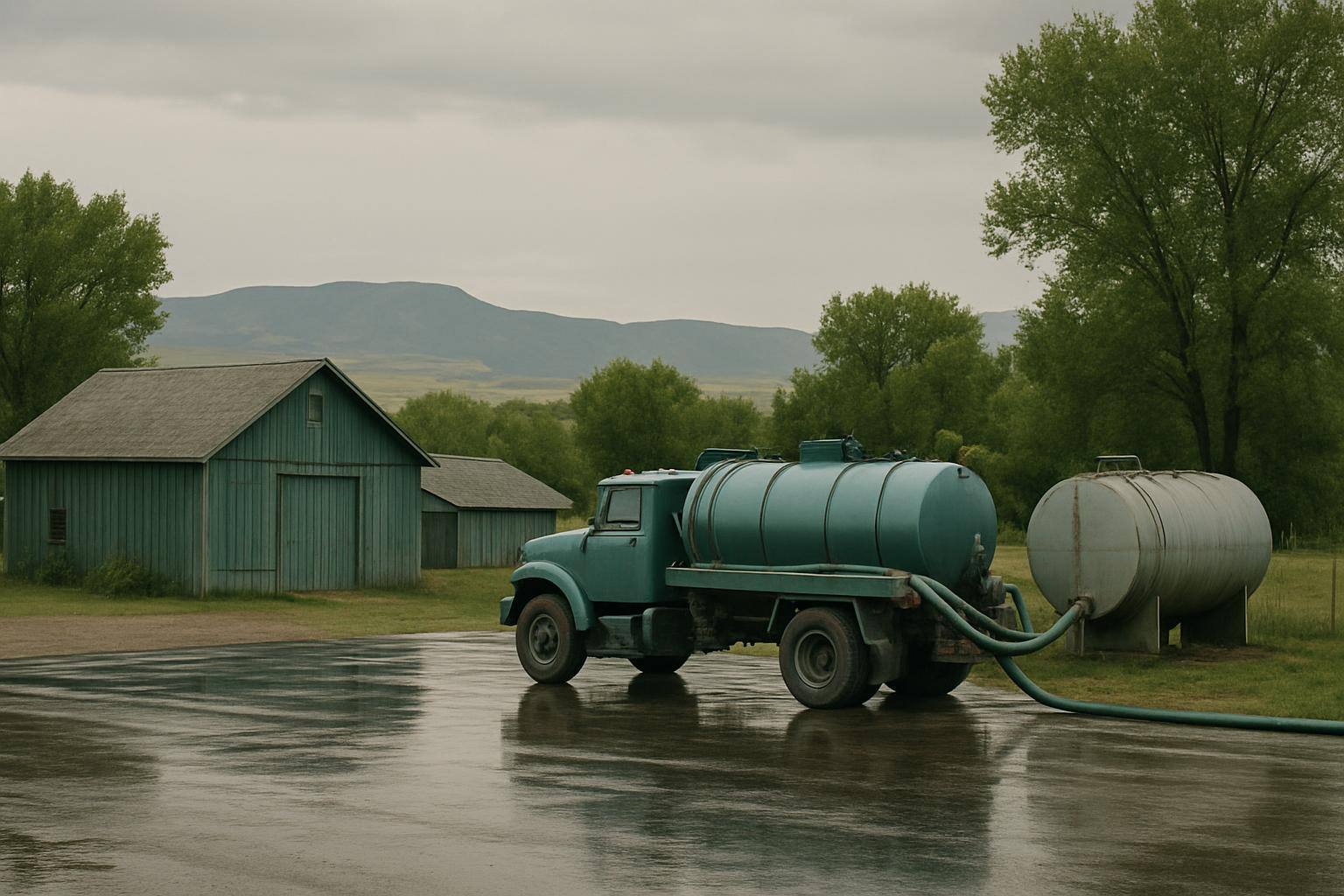
At Lovell properties, the truck usually stays on a driveway, firm side yard, or accessible lane while the hose reaches the buried tank. Irrigation ditches, soft soil, fences, parked vehicles, overhead lines, narrow alleys, snow, and steep approaches can limit placement.
Permits
Private property usually needs no placement permit for septic tank pumping. If equipment or a hose must use a street, alley, boulevard, or sidewalk in Lovell, ask the City of Lovell about approval, fees, and how long the authorization lasts.
HOA, covenant, and landlord rules can affect access, truck placement, gate use, or work hours in Big Horn County. Confirm property rules before scheduling, particularly for managed rentals or shared drives in Lovell.
The service spot needs a usable approach, enough width for the truck, overhead clearance, firm ground, and a practical hose route to the tank. Clear seasonal snow, irrigation equipment, vehicles, gates, and loose materials, then mention soft ground or tight turns during the call.
Service covers downtown Lovell, North Lovell, South Lovell, residential streets near the valley, and rural properties along the irrigated outskirts. Nearby work can also be discussed for Powell, Cody, Ranchester, Worland, and Basin, with distance and access considered in the quote.
Not sure about your street? Ask on the call and we will tell you which office handles it.
Timing
Spring irrigation runoff can soften approaches around Lovell valley homes, while summer heat and dry wind expose dusty access routes. Fall property sales and scheduled maintenance can increase planning needs. Winter snow may cover lids and restrict drives, so tank location, ground firmness, and clearing are discussed before the service date.
Runoff can leave valley approaches soft near North Lovell and South Lovell. Identify firm truck placement and keep irrigation equipment clear before the pumping visit.
Snow can cover tank lids, gates, and drive edges around Lovell properties. Clear the route and explain likely tank locations so access can be planned safely.
Service area
Lovell is part of our Big Horn County coverage, and we also serve the neighboring communities below.
Why us
Lovell's homes sit in an irrigated valley beneath canyon country, so the tank may be close to a soft ditch bank, fenced yard, or older driveway rather than an open truck pad. We ask about those conditions before setting the route.
Haste Dumpster Service · Lovell
From downtown lots to acreage outside town, Lovell systems vary by age, tank size, and use. Describing the lid location, recent pumping, and any backup gives the operator enough detail to plan equipment and access honestly.
Click Here to Call (254) 249-9925FAQs
Still have a question about Lovell? Call (254) 249-9925 and ask a real person.
The exact quote is given on the call after reviewing tank size, distance, access, material, ground conditions, and the work needed. A home near downtown Lovell may have a shorter hose route than an acreage property affected by irrigation runoff, so describe the full approach.
The 1000-1500 gallons range is a common residential fit, but the actual tank controls the recommendation. Older Lovell homes, additions, acreage properties, and commercial systems can require a different tier, so share the tank information if it is available.
Septic tank pumping is a service visit rather than a dumpster rental period. The service date is set by phone, and the operator plans around your Lovell access, tank location, weather, and any preparation needed before pumping.
Only wastewater and normal septic-safe household waste should enter a septic system. In Lovell, avoid treating the tank like a disposal pit, and describe unusual material, chemicals, or a recent cleanup before the pumping visit.
Hazardous chemicals, flammable material, construction debris, trash, and unapproved waste cannot go into the system. These materials can create unsafe pumping conditions, so mention them during the call before service is scheduled.
Private-property septic pumping usually needs no placement permit. If the truck, hose, or equipment must use a Lovell street, alley, boulevard, or sidewalk, ask the City of Lovell about approval, fees, and duration.
The truck can usually use a driveway when the approach is firm, wide enough, clear overhead, and suitable for the equipment. Irrigation runoff, soft soil, tight turns, gates, snow, and parked vehicles can require another placement plan.
The delivery or service date is set on the call, not promised in advance. Share your preferred timing, tank location, gate instructions, and any snow or irrigation conditions so the visit can be planned accurately.
Lovell weather can affect pumping access because dry heat hardens ground, wind complicates hose handling, irrigation runoff softens approaches, and winter snow can cover lids. Report current ground and access conditions when arranging the visit.
Yes, septic pumping can be planned for Lovell properties near irrigated valley ground when the tank and truck route are accessible. Identify ditches, wet soil, fences, and the firmest approach so placement can be evaluated before the service date.
A real person answers · No forms · Every quote given on the phone