Residential septic tank pumping
Routine pumping for Powell homes, acreage properties, and rural residences where tank access may be beyond a gravel drive or beside an irrigation channel.

Septic tank pumping service · Powell, WY
North Powell agricultural lots often put septic tanks near irrigation channels, soft ground, or long gravel approaches. One call gets the tank size, access limits, and service visit sorted.
A real person answers · No forms · No waiting on a quote email

Size
The quote starts by matching your tank to the job, from a small residential system to the standard septic tank range common around Powell homes and acreage lots.
Quote
The exact quote is given on the call, based on tank size, access, distance, material, and pumping conditions.
Date
The service date is set on the call after access, tank location, and seasonal ground conditions are discussed.
From North Powell acreage lots to homes near downtown, septic work changes with irrigation ditches, basin soils, and long approaches. Properties toward the Powell Canal, South Absaroka Street, and the agricultural edges may need careful access planning. Rural Park County homes and small commercial sites also require the tank location and approach to be described before scheduling.
Services
Powell
Powell homes, acreage properties, irrigation-served lots, and small businesses do not all place tanks the same way. Some have a clear driveway, while others require an approach beside a ditch or across ground that changes after watering or snow. Describe the tank, lid location, and access so the service can be planned around the actual Powell property.
Routine pumping for Powell homes, acreage properties, and rural residences where tank access may be beyond a gravel drive or beside an irrigation channel.
Cleaning removes settled material from residential systems around Powell and helps identify access or ground conditions that could affect the work.
Backup pumping addresses an overflowing or slow system at Powell homes, with tank location and wastewater access discussed before the visit.
Inspection pumping can support a Powell property review when the tank must be opened, pumped, and examined before a sale or repair decision.
Commercial septic pumping serves Powell businesses, facilities, and multi-unit properties with larger systems or holding tanks and more involved access.
RV and holding tank pumping fits Powell travel, farm, and temporary-use situations where the holding tank location and approach need clear description.
Emergency septic pumping helps Powell property owners address active backups, surface wastewater, or a tank that cannot wait for routine scheduling.
The standard septic tank range often fits scheduled pumping at Powell residences, but acreage homes, commercial properties, and holding systems can vary widely. The right tier depends on tank capacity, not the size of the house alone, so have the tank information or approximate location ready.
Typically suited to smaller residential tanks and routine household pumping.
Up to 1000 gallons. This can fit a smaller Powell residence or compact residential system with routine household use and accessible tank lids.
A common residential tank range for scheduled pumping and cleaning.
1000-1500 gallons. This is a common fit for Powell homes, including properties with larger households or rural lots outside the compact town grid.
A larger residential or light commercial tank range requiring extended pumping capacity.
1500-2000 gallons. This suits a larger Powell residence, acreage property, or light commercial system that needs more pumping capacity.
A high-capacity tank or holding system commonly used by businesses, facilities and multi-unit properties.
Over 2000 gallons. This is intended for Powell businesses, facilities, multi-unit properties, and high-capacity holding systems with substantial wastewater use.
Cost
The exact quote is given on the call after the tank size and service type are clear. Cost can change with pumping volume, material, access, distance from Powell, tank location, rental period if applicable, and whether the visit involves a backup or inspection.
Capacity and the amount of material being pumped affect the work. The tank type, level, contents, and expected weight should be described as accurately as possible.
Distance from the service area and the route across a Powell lot can change the quote, especially with long gravel drives, irrigation crossings, narrow approaches, or soft basin soil.
A buried tank near a driveway is handled differently from one beyond a ditch or behind a structure. Lid visibility, hose reach, and vehicle placement all matter.
Routine pumping, cleaning, backup work, inspection pumping, and commercial service involve different work conditions. Material type and heavier loads can affect the exact quote.
Avoid surprise charges by identifying the tank size, lid location, access route, irrigation channels, recent backup, and any known material concerns before the quote is prepared on the call.
What goes in
This category covers household septic systems at Powell homes, including town properties, acreage residences, and rural Park County locations with buried tanks.
Commercial holding tanks serve Powell businesses, facilities, and agricultural operations. Describe the system capacity, use, tank location, and approach across the property.
Wastewater emergencies include backups, overflows, and urgent tank conditions at Powell residences or businesses. Keep people away from exposed wastewater and explain the situation clearly.
Not accepted. Do not place household trash, chemicals, fuel, sharp debris, construction material, or unknown substances in a septic system, and service coverage does not include unrelated waste hauling.
Projects
Routine service for Powell residences, including homes near the town grid and acreage properties where irrigation channels or gravel approaches affect tank access.
Backup service for Powell homes and Park County properties dealing with slow drains, overflow, or wastewater near the tank or drain field.
Inspection pumping helps a Powell buyer, seller, or property owner view the tank condition after material is removed and access is established.
Property sale work supports Powell homes and acreage transfers where the tank must be pumped before inspection, documentation, or a closing decision.
Commercial service for Powell businesses, facilities, and multi-unit properties with larger systems, holding tanks, or access routes across working grounds.
RV holding tank service fits Powell travel, farm, and temporary-use locations where the vehicle or tank sits on gravel, pavement, or an open lot.
Emergency service addresses urgent conditions around Powell homes, agricultural valley properties, and Park County sites where wastewater cannot remain exposed.
Share the tank size, system type, lid location, recent symptoms, property setting, and whether irrigation, snow, or soft ground affects access.
A real person records the service details and sets the visit date after reviewing the Powell property, route, tank location, and job conditions.
The tank area must be reachable and clear. Pumping is planned around lid access, approach width, nearby ditches, overhead clearance, and ground strength.
After pumping, review any practical observations about the tank, access, backup conditions, or future service needs before the equipment leaves.
Weather
Powell has dry heat, wind, winter snow, and irrigation-season ground changes. Dry conditions can leave dusty approaches, while watering may soften soil beside channels. Snow and frozen ground can hide lids or limit vehicle placement, so describe current conditions when setting the service date.
Placement
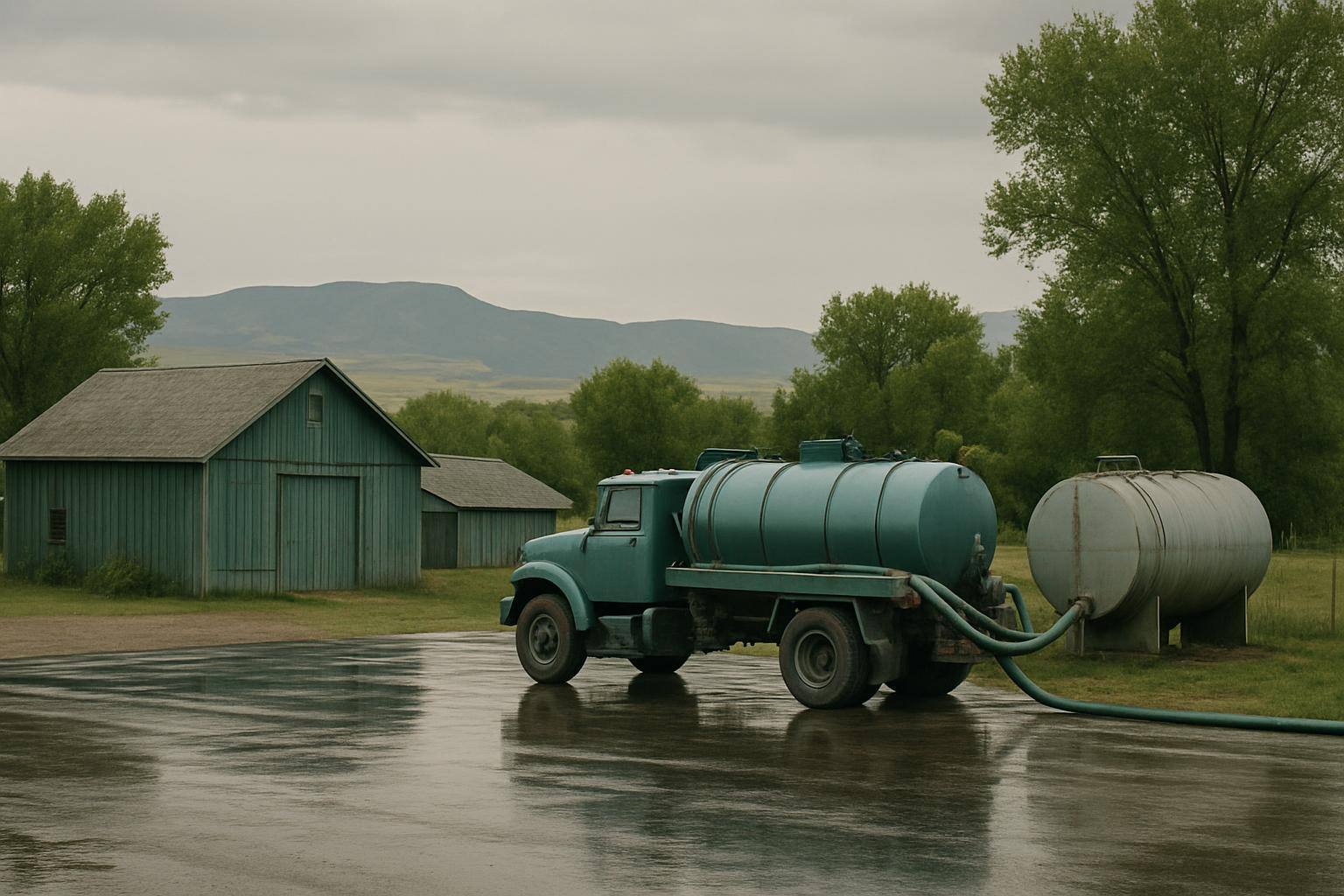
At Powell properties, the service vehicle usually works from a driveway, side yard, gravel approach, or open area near the septic tank. Irrigation ditches, basin soil, fences, parked equipment, low branches, snow, and narrow rural approaches can limit placement and hose reach.
Permits
Private-property septic tank pumping usually needs no permit. If equipment must stand in a Powell street, alley, boulevard, or sidewalk area, ask the City of Powell about approval, fees, and how long that approval remains valid before scheduling placement.
Some Park County subdivisions, covenants, landlords, or property managers set rules for access, vehicle placement, visible equipment, or wastewater work. Check those requirements before scheduling if the Powell property is governed by private rules.
The spot needs a stable approach from the road, enough width for the service equipment, clear overhead space, and ground that can support the vehicle. In Powell, seasonal irrigation, snow, mud, ditch crossings, and spring softness may require a different access point.
Service planning covers Powell town properties, North Powell, South Powell, the areas around the Powell Canal, and agricultural valley lots along local corridors. Nearby rural Park County locations can also be discussed, along with service needs connected to Lovell, Cody, Worland, Basin, and Ranchester.
Not sure about your street? Ask on the call and we will tell you which office handles it.
Timing
Powell septic work can become more complicated during irrigation season, when channels are flowing and valley soil near them may soften. Dry summer heat and wind create dusty approaches, while autumn changes and winter snow can hide lids or restrict access. Describe the current ground and weather when setting the visit.
During irrigation season around Powell, channels and watered ground can limit where equipment sits. Mark ditches, keep gates open, and identify a firm route that avoids damaging banks or blocking water flow.
Snow can cover tank lids, driveway edges, and drainage features around Powell properties. Clear the access route where possible and explain frozen or drifted conditions before the service date is set.
Service area
Powell is part of our Park County coverage, and we also serve the neighboring communities below.
Why us
Powell's agricultural valley layout means a septic tank may sit beyond a gravel approach, beside an irrigation channel, or on ground that changes after watering. Describing those details helps determine where equipment can safely stand and how the tank can be reached.
Haste Dumpster Service · Powell
Dry heat, wind, winter snow, and basin soils all affect Powell service access. A clear tank location, firm approach, and notes about seasonal obstacles make the visit easier to plan than a house description alone.
Click Here to Call (254) 249-9925FAQs
Still have a question about Powell? Call (254) 249-9925 and ask a real person.
The exact quote is given on the call after tank size, pumping condition, access, distance, material, and service type are reviewed. A Powell property with a long gravel approach or irrigation channel may require different planning from a town driveway, so describe the route and tank location.
Many Powell homes fit the standard septic tank range, but the actual tank capacity controls the recommendation. Acreage homes, larger households, commercial properties, and holding systems may need a different tier, so have the tank record or approximate capacity ready.
Septic tank pumping is a service visit rather than a standard dumpster rental period. If another rental service is being discussed, the standard rental is seven days with extensions by the day, but septic work is scheduled around the tank and service need.
A septic system should receive normal wastewater and suitable household wastewater only. Do not add chemicals, fuel, trash, sharp debris, construction material, or unknown substances, because those materials can affect pumping conditions and system operation.
Household trash, fuel, chemicals, sharp debris, construction waste, and unknown substances cannot be treated as ordinary septic material. Describe unusual contents before scheduling, especially at Powell farms, workshops, or commercial properties.
Private-property septic pumping usually needs no permit. If equipment must occupy a street, alley, boulevard, or sidewalk, ask the City of Powell about approval, fees, and duration before selecting that placement.
The driveway can often serve as the equipment approach if it is stable, wide enough, clear overhead, and connected to the tank by a workable route. Gravel, snow, irrigation ditches, soft basin soil, gates, and parked equipment can change the placement plan.
The delivery or service date is set on the call after the tank, access, and property conditions are reviewed. Same-day or next-day delivery may be worth asking about, but availability depends on the job and current schedule.
Yes, Powell weather can affect access through snow, frozen ground, wind, dry dust, and irrigation-season softness. Clear the route when possible and report ditches, drifts, muddy ground, or hidden tank lids before the service date is set.
A tank beside a Powell irrigation channel can be serviced if the approach and vehicle position are workable. Mark the channel, identify firm ground, keep the route open, and explain water levels or recent irrigation so placement can be planned safely.
A real person answers · No forms · Every quote given on the phone